

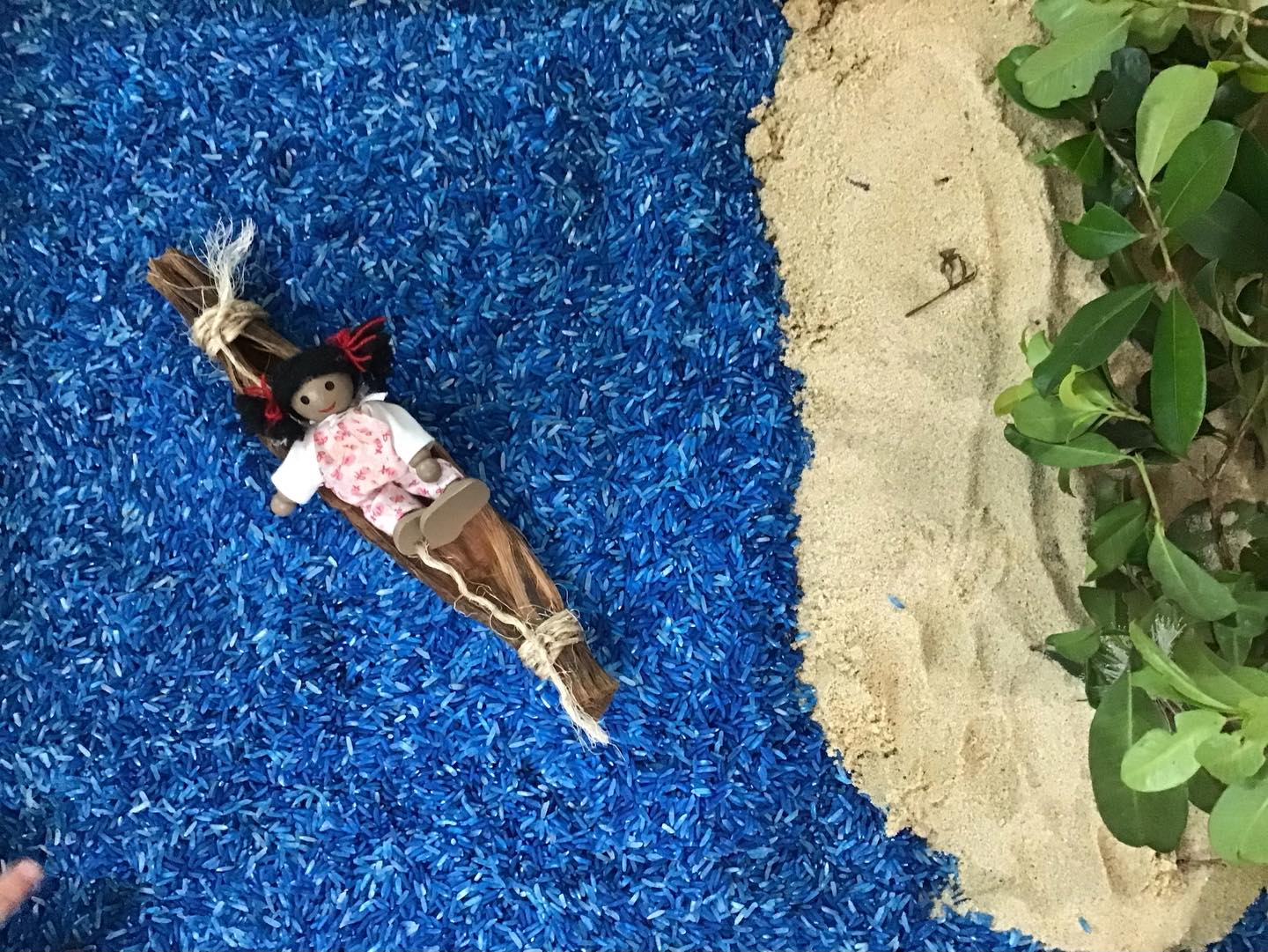

At Milestones Early Learning Blaxland, a group of children recently gathered around a collection of natural materials - bark, stones, small figures - and began to build.
They were creating canoes. And through that simple act of play, they were connecting with one of the oldest cultures on earth.
What is a Nawi?
A Nawi is a traditional canoe used by Aboriginal peoples of the Sydney region, carefully crafted from tree bark and natural materials. These canoes were central to everyday life, used to travel rivers, lakes, and coastal waters, to fish, gather food, and maintain connections between communities.
More than a vessel, the Nawi reflects a profound relationship with Country and with place - knowledge passed down through generations of storytelling, observation, and practice.
Learning Through Play
As part of our Lifelong Learning Curriculum, and supported by resources from Wandana Aboriginal Education, our educators at Milestones Blaxland invited children to create their own Nawi journeys using natural materials and small figures.
There was no script. Children decided where their canoes were going, who was travelling in them, and what they might find along the way. Some narrated quietly to themselves. Others talked animatedly with friends. A few simply sat and thought.
That space, unhurried, open-ended, and child-led, is where some of the richest early learning happens.
Bringing Aboriginal Perspectives Into Everyday Learning
Each month, our centres are supported by Wandana Aboriginal Education, who provide carefully developed resources that help educators introduce Aboriginal and Torres Strait Islander perspectives in ways that are respectful, accurate, and age-appropriate.
Rather than formal lessons, these experiences are woven into the rhythm of everyday play — helping children engage with new ideas in ways that feel natural and genuine.
This approach reflects national guidance from ACECQA on embedding Aboriginal and Torres Strait Islander perspectives within early childhood education. Across our centres, teams are also working towards, or have already implemented, a Reconciliation Action Plan (RAP), supporting ongoing learning, reflection, and connection with community.
Why These Experiences Matter
For children under five, learning happens through doing, imagining, and talking with others. Experiences like these help children to build language and storytelling skills, develop confidence in expressing their own ideas, and begin to understand the many different ways people connect to place and community.
These are foundations that support not just school readiness, but a lifelong curiosity about the world.
Everyday Moments, Meaningful Learning
At Milestones Early Learning, we're proud to offer a curriculum that goes beyond care.
Through our partnership with Wandana Aboriginal Education, and the dedicated educators across our centres, children have the opportunity to explore, question, and connect, not through worksheets or formal instruction, but through the kind of meaningful, hands-on experiences that stay with a child long after the day is done.