


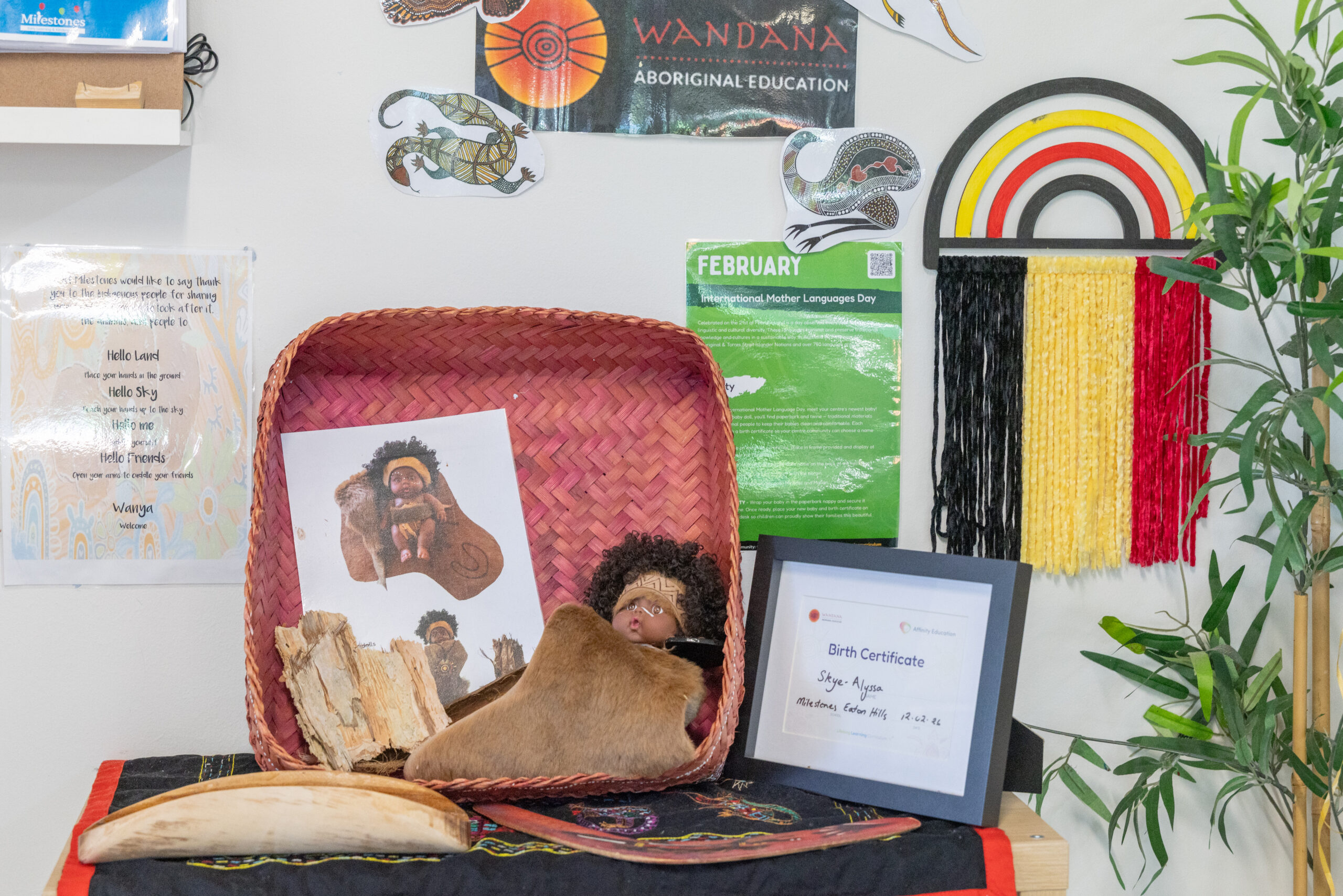

National Reconciliation Week runs from 27 May to 3 June each year, marking two of the most significant milestones in Australia's reconciliation journey - the 1967 referendum and the 1992 Mabo decision. This year's theme, All In, is a call for every Australian to commit to reconciliation not just this week, but every day. At Milestones Early Learning, that commitment begins in the earliest years of a child's life - in the stories we tell, the Country we acknowledge, and the relationships we build with First Nations communities.
Why reconciliation starts in early childhood
The early years are when children begin to understand who they are, where they come from, and how they relate to the world around them. They are also when the foundations of respect, curiosity, and connection are laid, and that makes early learning one of the most important places where reconciliation can take root.
Children in the early years are naturally open. They engage with culture, story, and Country without the barriers that can develop later in life. When First Nations perspectives, languages, and ways of knowing are woven into a child's earliest learning experiences, they become part of how that child understands the world, not an addition to it.
This is why Reconciliation Week is not a single event in our calendar. It's a reflection of something that shapes how we approach learning every day.
Our partnership with Wandana Aboriginal Education
At the heart of how Milestones engages with First Nations learning is our partnership with Wandana Aboriginal Education. Wandana brings deep cultural knowledge, lived experience, and genuine community connection to the work of early childhood education, and it is through this partnership that the Lifelong Learning Curriculum incorporates First Nations perspectives in a way that is authentic, respectful, and meaningful.
Wandana's educators and cultural knowledge holders work alongside our teams to ensure that what children experience - the stories they hear, the art they create, the language they encounter, the relationship with Country they begin to develop - is grounded in truth and in community. This is not curriculum content added from outside. It is knowledge shared by the people who hold it.
We are grateful for this partnership, and for the trust and generosity it represents.
What First Nations learning looks like for children at Milestones
For young children, culture is learned through experience, through doing, seeing, listening, and belonging. Across our centres, First Nations learning is woven into the everyday rather than reserved for special occasions.
Children engage with First Nations stories through picture books, yarning circles, and storytelling, learning to listen deeply and to value narrative as a way of knowing. They explore art and mark-making inspired by Country, understanding that Aboriginal and Torres Strait Islander art traditions are among the oldest in the world. They hear and begin to use words from local First Nations languages, building a connection to the place they live that goes beyond what a map can show. And they learn what it means to care for Country, not as an abstract concept, but as a living relationship between people and the land they belong to.
Through these experiences, children develop a sense of shared history and shared responsibility, a sense of what it means to be all in together.
What the 2026 theme means for families
The 2026 theme All In was created in collaboration with Carbon Creative, a First Nations-owned and operated marketing and creative agency, with artwork by renowned Gumbaynggirr/Bundjalung artist Otis Hope Carey. The artwork represents people from all walks of life coming together, a fitting image for an early learning community.
This year's National Reconciliation Week theme, All In, asks all of us to step away from the sidelines. For families, that might look like:
- Acknowledging Country with your children when you visit a park, beach, or public space, and talking about what that means
- Reading picture books by First Nations authors and illustrators together at home
- Visiting a local cultural event or exhibition during Reconciliation Week
- Having honest, age-appropriate conversations about Australia's history, including the parts that are hard
- Asking your child's educators what First Nations learning has looked like in their room lately
A week to reflect, and a commitment that lasts beyond it
Reconciliation Week is a moment to pause and reflect on how far Australia has come, and on how much work remains. At Milestones, we use this week to celebrate the learning our children are already doing, to thank our partners at Wandana Aboriginal Education, and to recommit to the ongoing work of embedding First Nations perspectives genuinely and respectfully into everything we do.
We believe that the children in our care today, who are growing up knowing how to acknowledge Country, who hear First Nations stories as a natural part of their learning, who understand that Australia's history is long and layered and worth knowing, will carry something important with them into the future.
That is what All In means to us.
See our Reconciliation Action Plan.